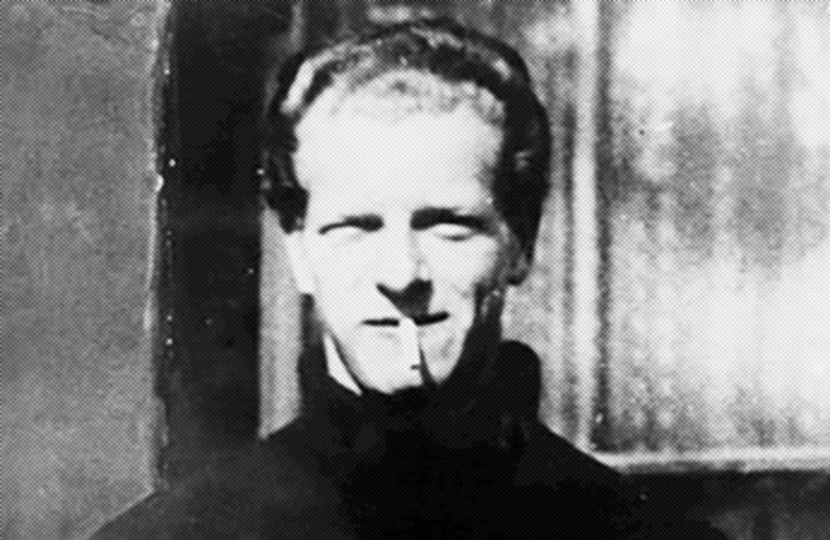
Seventy years ago, a man with learning difficulties said a four-word phrase (‘Let Him Have It’) and was subsequently sentenced to death. While that conviction for murder was later quashed, Derek Bentley’s hanging could hardly be reversed. His fate remains a grim reminder that under the legal doctrine of joint enterprise, a set of legal principles from Victorian times, a person can be punished by the state for the actions of another.
The law on joint enterprise essentially lowers the evidential bar for the prosecution, who will deal with a different burden of proof to that of a normal criminal charge. When a charge is one of joint enterprise, a person can be prosecuted if they can be shown to have intended to encourage or assist another to commit an offence. This has been the case since 2016, when the interpretation of the law by the courts was changed. Previously, a person could have merely foreseen the committing of the offence to be guilty of it (‘the foresight test’).
This reconsideration of the law by the Supreme Court was long overdue, but there remain issues with the application of the doctrine of joint enterprise, particularly in criminal appeals where ‘substantial injustice’ must be proven. Almost every appeal to overturn a joint enterprise conviction has been unsuccessful, with leave to appeal denied to 13 defendants in six separate cases in the six months following the Supreme Court’s ruling in Jogee (that seemingly reformed the doctrine of joint enterprise). The Jogee ruling was not an abolition of joint enterprise, as some may believe; it was merely an alteration of what must be proved for a conviction.
Joint Enterprise Not Guilty by Association (JENGbA), a group founded in 2010, campaigns for legal reform and acquittals for those wrongly convicted under the doctrine of joint enterprise. One case supported by JENGbA is that of a man who was convicted of murder in 2014, having been involved in a fight that ended with a fatal stabbing. The man, who is currently serving a life prison sentence, had not touched the knife, which had been concealed in a bag, and may not have even known of its existence. In some countries, this case would not have even progressed to court. Having failed at the appeal stage, the outcome of the case may depend on the Criminal Appeal (Amendment) Bill, a private member’s bill that calls for fairer appeal processes in joint enterprise cases by abolishing the ‘substantial injustice’ test.
The guidance for the ‘substantial injustice’ test, described as ‘unreachable’ by campaigners, is lacking. The test has hindered criminal appeals partly because there is no way of knowing what evidence the jury believed. It is said that the proposed legislation, if passed, will be a step forward in protecting the human right to a fair trial by giving a right of appeal to cases that fall under the now-abolished parasitic accessorial liability. In practice, parasitic accessorial liability authorises convictions for serious offences where it is difficult to prove a crime or event.
The statistics – or lack of, given the last submitted joint enterprise data dates back to 2013 – have prompted JENGbA to instruct Liberty, a leading advocacy group, to launch a legal challenge against the CPS. Joint enterprise convictions can be based on prejudices, stereotypes, and irrelevant information such as defendants’ music preferences – described by former minister Andrew Mitchell MP as ‘a failure by our criminal justice system to distinguish between gangs and groups’. Nonetheless, in his previous role as Director of Public Prosecutions (DPP), the Labour leader Sir Keir Starmer brushed off concerns of a ‘dragnet’ approach to charging young people with gang-related joint enterprise offences, much to the dismay of some. In addition, it is felt by some that insufficient effort is made by prosecutors in distinguishing between the contributions and faults that led to the committing of a crime.
Parliamentary support for JENGbA’s campaign has come from all sides of the political arena, with a party pledge to reform the law coming first from the Liberal Democrats in 2015, who argued that the ‘discredited’ doctrine of joint enterprise ‘sweeps into serious criminality people who are marginally associated’ with an offence. Labour followed, with then-shadow justice secretary David Lammy MP pledging that a Labour government would abolish or reform the law of joint enterprise. However, Lammy is no longer in his shadow justice brief, and his successor, Steve Reed, in a first since 2004, can be said to inspire little faith, given his complete lack of legal credentials or experience.
It is unfortunate to see many rejected appeals and little movement in correcting the injustices that have occurred. Passionate voices – many of whom are legally qualified – live to raise awareness of the perils of joint enterprise, championing those accused and convicted under joint enterprise. In the words of the noted reformer Jeremy Bentham, ‘the power of the lawyer is in the uncertainty of the law’.
 Elliot Tyler