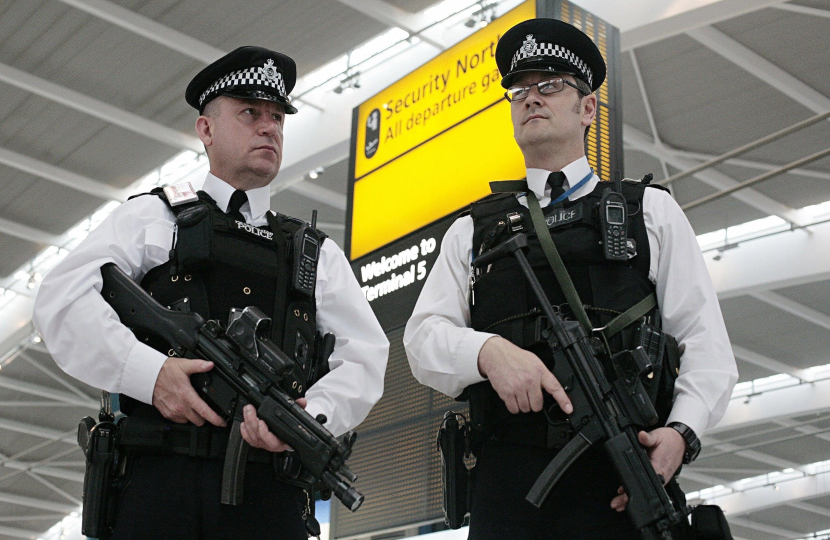
Policing by consent, which is one of the nine core principles in Sir Robert Peel’s Metropolitan Police Act 1829, means the police’s ability to perform their duties is dependent on public approval of police actions. However, in recent years there has been massive anger towards the police when unarmed civilians have been shot and killed, sparking inquests, protests and even violent riots. Failures to hold proper inquiries into police shootings are ‘a threat to democracy’, the Office for Police Conduct has said. In this article I seek to address and answer, with the help of expert academics, two key and controversial questions: should police be routinely armed, and should police who kill be immune from prosecution?
I presented these questions to Professor Mark Button, Director of the Centre for Counter Fraud Studies at Portsmouth University, who is against the arming of police officers. He takes this stance because, in his view, criminals would be more determined to use firearms knowing they would be up against armed police officers. He added that the risk of unnecessary deaths through police shooting incidents would be increased. The author and academic Dr Mohammed Ibrahim Shire thinks that arming every police officer could lead to a change in the power dynamic between the public and police. Public confidence and trust in policing is a key issue, as legitimacy is essential. Additionally, while arming officers might mitigate the challenges posed by terrorism and continuing reports of serious knife crime, it may also exacerbate existing inequalities in the criminal justice system and increase the risk of further minorities’ deaths.
Dr Sarah Charman, the editor of the respected International Journal of Law, Crime and Justice, shared some thoughts with me on the matter. Crimes involving firearms are thankfully extremely low in England, and careful thought must be given to the implications of moving from a model of compliance to a model of coercion, and with that the potential decline in legitimacy and confidence essential to the success of policing operations around the world. Generally, police officers do not join the service to carry firearms, Dr Charman suggested. The latest Police Federation survey shows that only 34% of police officers support routine arming, with Dr John Fox, a Senior Lecturer in Police Studies, taking the view that the police don’t actually want to be armed. But interestingly, only 9% of Metropolitan Police officers surveyed say they would not carry a firearm under any circumstances. Dr Fox expressed displeasure about police forces, such as Northamptonshire Police, choosing to arm every officer with a taser, as there is a danger they will become ‘paramilitary’ in their appearance and the concept of policing by consent could be eroded because officers seem unapproachable. The officers may even be warier of being approached when they know they have a serious weapon in their belt which could be grabbed. Anything that reduces trust and friendly contact between the police and public is a negative thing, Dr Fox added.
I spoke with a former police chief superintendent – a firearms commander with 30 years’ experience. This former officer, who wishes to remain anonymous, takes a clear view that police should not be routinely armed. He believes it would reduce the reliance on communication during an incident, with the current approach of negotiation and reasoning being sufficient to de-escalate a situation. Arming police officers would put additional firearms on the street and may create a blasé process of decision making. As for prosecutions of police firearms officers, the former officer argues that prosecutions should only occur when there is evidence of negligence, such as drinking while on active duty. In the event of prosecution, it must be remembered that evidence such as video footage does not always provide context for the officers’ actions at that time. However, he was clear that if the firearms officers believe there to be a genuine threat to life present, they should be immune from prosecution regardless of whether the suspect was armed or only appeared to be armed.
In a number of European jurisdictions, the police are routinely armed. I conducted an interview with Dr Damien Cassan, a Senior Lecturer in Police Leadership, who compared police forces in France and England for his PhD at the Université de Lille. In France, the national police, whose methods and occupational culture are more ‘military’, are accountable to the central government, Dr Cassan advised, whereas in England the police are, to a larger extent, accountable to the public, in the precious principle called ‘policing by consent’. This is highlighted by the presence of visible identification numbers on the uniform of every English police officer, allowing citizens to complain about an officer’s conduct. One key parallel is that police in both countries are rarely prosecuted for fatal shootings. Police should be held to account, Dr Cassan concludes, and their status should not impact any assessment of culpability.
There are probably more armed officers than the majority of people might think, particularly in a non-uniformed capacity, advised Mike Nash, Emeritus Professor at Portsmouth University. It is the case that an armed response can be quickly summoned if a situation warrants it, but the use of firearms is currently covered by strict rules and requires the authorisation of senior officers. Police do have the equipment, such as gas sprays and the extending baton, to defend themselves and disable offenders if necessary. Whenever a death occurs at the hands of the police, it must be fully investigated independently. But, Prof. Nash added, if a duly authorised officer were to kill a citizen in the course of their duty, in an unavoidable and life-threatening situation, a prosecution would not be just.
At the time of writing, a date had just been set for the trial of a West Mercia police officer accused of murdering Dalian Atkinson, a former international footballer. Atkinson died at his father’s home after two constables had used a stun gun and other force on him. Dr Fox highlighted this case as a rare example of when prosecutions do take place. This case has reignited the debate as to whether police officers should be immune from prosecution after taking the life of a suspect, with internet forums filled with contrasting opinions. The experts I consulted generally took the view that police should not be routinely armed, but there were varying viewpoints when it came to the topic of tasers and other supposedly non-lethal weapons. As for prosecutions of police officers, the experts believed there should be evidence of wrongdoing before court proceedings are even considered. But it was stressed, in particular by Dr Mohammed Ibrahim Shire, that the police are not above the law.
 Elliot Tyler